
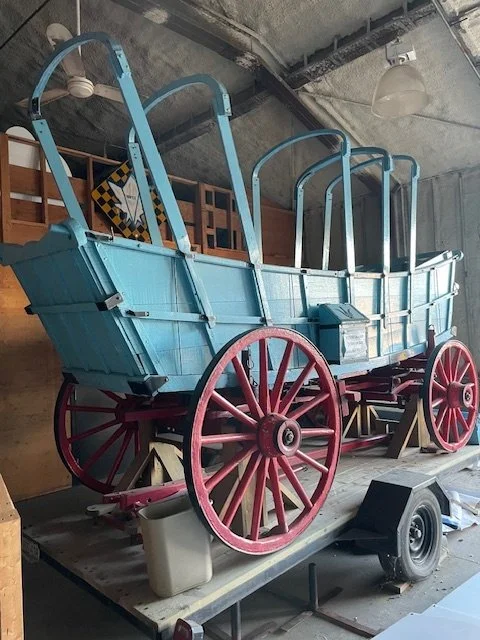
THE CONESTOGA WAGON
The Conestoga wagon was one of the most important early forms of freight transport developed in this region, and it played a key role in the movement of goods through St. Jacobs and the broader Waterloo County area during the 18th and 19th centuries.
Designed by German-speaking Mennonite settlers in the Conestoga River region of Pennsylvania—and later used and refined in Upper Canada—the wagon was built for heavy hauling over rough terrain. Its distinctive curved floor helped keep cargo from shifting, while its high, bowed canvas cover protected goods from weather. Large wooden wheels and a strong frame allowed it to carry substantial loads of grain, flour, and manufactured goods between farms, mills, and emerging towns.
In this region, Conestoga wagons became essential to the early economy, connecting rural producers to markets and supporting the growth of settlements like St. Jacobs. Though eventually replaced by rail and modern transport, the wagon remains a lasting symbol of early rural trade and Mennonite settler industry in Waterloo Region.