MENNONITE HERITAGE
Early 1800s: Mennonite families began settling in Waterloo Region, many arriving from Pennsylvania in search of religious freedom and fertile farmland. Among the early settlers in the St. Jacobs area were the Cress and Bauman families. These settlers helped establish a community built around farming, family, faith and skilled trades.
1844–1850s: The St. Jacobs area began to grow as mills, businesses and schools attracted more settlers. Jacob C. Snider and his son helped develop the village, known initially as Jakobstettel, or “Jacob’s Village.” The first Mennonite congregation in the area was organized in 1844, with John W. Brubacher remembered as its founding leader. Benjamin Eby, an influential Mennonite bishop, educator and author, helped shape Mennonite faith and education throughout the wider Waterloo region.
1889: A significant division within Ontario Mennonite communities led to the emergence of the more conservative Old Order Mennonites and the more modernizing Conference Mennonites. Over time, further differences developed around transportation, electricity, education and other technologies. Today, Mennonite communities range from those who maintain traditional horse-and-buggy lifestyles to those who use modern technology and participate fully in contemporary society.
1915: The St. Jacobs Mennonite congregation moved into the Village and adopted the name St. Jacobs Mennonite Church, continuing a tradition of worship that began more than 70 years earlier.
Mennonite faith emphasizes following Jesus, peace, humility, community and helping others. For many Old Order Mennonites, limiting certain technologies is a way to protect their faith, family life and close-knit communities. Their preference for privacy and the freedom to live according to their beliefs reflects a long history of seeking religious independence.
Today, Mennonite heritage remains an important part of St. Jacobs and the surrounding countryside. It is a history of settlement, perseverance, craftsmanship and community, as well as the different ways people have chosen to preserve their beliefs while the world around them changes.
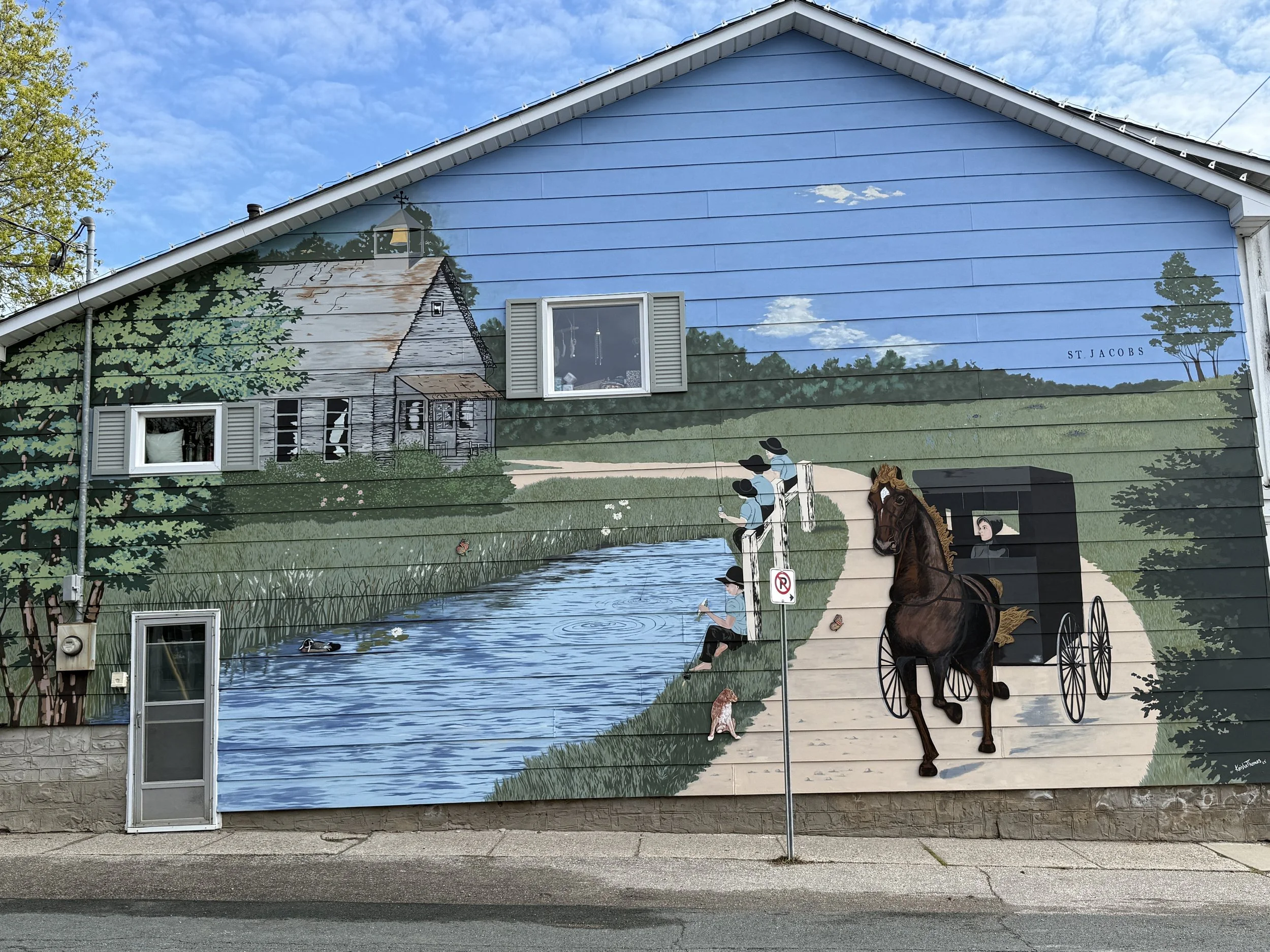
More about the Horse and Buggy Mural and our Art Walk here
Next Stop: Where we Gather - our Indigenous History 1380 King St. North
The Village of St. Jacobs Historical Trail
Self Guided Walk
Explore the History Walk by selecting each stop on the map below.